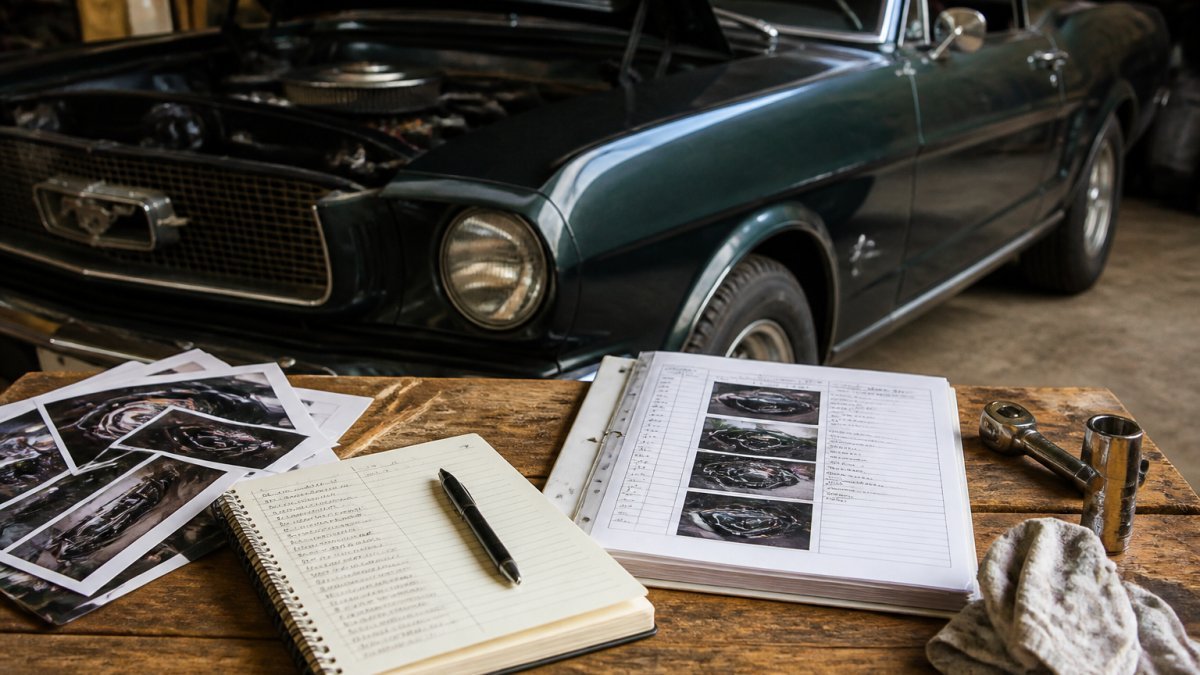
Maintaining a meticulous historical record of vintage vehicle modifications is far more than simply retaining financial receipts; it serves as undeniable verification of professional craftsmanship and mechanical integrity. Years pass, photos get lost, receipts fade, and you can’t recall which parts you installed or when. Early records are easier to maintain and more complete than trying to reconstruct history later. Blurry or poorly lit photos create doubt. Well-lit images, take the time to get sharp. Field: Date; What to Record: Date work completed (not ordered); Example: 2026-03-14. Field: Odometer; What to Record: Mileage at completion; Example: 84,212 mi. Field: Modification; What to Record: Short description; Example: Front disc brake conversion. Not just brand; Example: Wilwood 140-11056-D, field: Part number(s); What to Record: Manufacturer part number. Field: Labor hours; What to Record: Actual or estimated; Example: 6.5 hrs. Field: Parts cost; What to Record: USD; Example: $1,240.00. Field: Labor cost; What to Record: USD (if paid); Example: $0.00. Fluid type, clearances, settings; Example: 85 ft-lb spindle nuts; DOT 4 fluid, field: Specifications; What to Record: Torque values. Receipt IDs, invoice IDs; Example: PH-2026-03-14-01 through -12; RCP-0087, field: Evidence; What to Record: Photo IDs.
A thorough archival system safeguards your financial investment, gives subsequent owners transparent insight into past labor, assists professional appraisers in determining accurate vehicle valuation, and maintains organized oversight throughout the restoration lifecycle. Enthusiasts frequently bypass this essential administrative phase under the assumption that human memory will suffice. However, as years elapse, photographic evidence disappears, paper invoices degrade, and specific component installation dates become entirely obscure. Thinking they’ll remember everything, many enthusiasts skip this step. A notebook, or a vehicle-tracking app, copy them into a spreadsheet.
Establishing Your Initial Archival Structure
Before initiating any mechanical work, determine whether your system will rely on physical folders, digital file repositories, or a hybrid approach. Identify key metrics requiring ongoing observation
- Storage Format: Digital files, printed folders, or combined methods
- Component Tracking: Precise part numbers and technical specifications
- Naming Convention: Standardized dating and component tags such as 2026-01-15_Engine_Swap_Receipt.pdf
- Phase Checklists: Structured outlines covering required photographs, documentation paperwork, and logging criteria
Constructing an initial documentation strategy requires roughly thirty minutes of preparation, yet it prevents hours of frantic administrative scrambling later in the project. Execute this preliminary planning phase prior to turning your first wrench. A documentation plan takes 30 minutes to create and saves hours of scrambling later.
Designing a Master Build Sheet Template
A comprehensive build sheet functions as your primary summary document, offering a centralized overview of every modification performed on the vehicle. Your master record must capture fundamental identity metrics, modification summaries, and detailed component inventories to confirm authenticity during insurance inquiries and vehicle resale.
- Vehicle Identity: VIN, manufacturing year, make, model, original paint color, and factory specifications
- Modification Summary: Explicit details regarding structural or mechanical changes and their operational purpose
- Parts Inventory: Manufacturer part numbers, commercial suppliers, and specific installation dates
- Lifecycle Maintenance: Ongoing updates appended after each operational milestone rather than aggregated months later
Capturing Compelling Restoration Imagery
Visual evidence provides the most compelling testimony regarding the chronological progression of a vintage car restoration. Secure photographs across every distinct phase of the project. Why Documenting Classic Car Mods Matters. Not after the project ends, start documenting on day one.
- Initial Assessment: Overall vehicle condition captured from multiple perspective angles alongside close-ups of specific problem areas slated for repair
- Pre-Removal Documentation: Factory original components recorded immediately prior to extraction
- Active Installation: Custom fabrication work, mechanical integration procedures, and component clearances
- Post-Completion Review: Multi-angle views of the finished installation, active operational performance, and diagnostic test metrics
Employ clean natural lighting during photography sessions, incorporate standard scaling objects like coins or rulers for minute components, and assign uniform file names to prevent misplacement. Natural daylight is best, and include a reference object for scale, like a ruler or coin, especially for small parts, use good lighting.
Maintaining a Granular Modification Log
Unlike a static build sheet, a modification log records operational changes dynamically over time. High specificity ensures that mechanics, future buyers, and evaluators fully comprehend the nature of the labor. Mechanic, or appraiser should understand exactly what was done, with what parts, by whom, and how to reverse it, specificity is what makes it useful: a future owner.
- Sequential Identification: Entry ID codes for cross-referencing individual tasks
- Temporal Markers: Exact completion dates rather than order dates, paired with closing odometer mileage
- System Categories: Designated classifications including engine, suspension, braking networks, electrical, interior, and body panels
- Technical Parameters: Exact torque values, fluid classifications, clearance tolerances, and adjustment settings
- Reversibility Status: Clear indications of whether alterations can be reversed and what components are required
Cross-Referencing Supporting Evidence
A log entry remains structurally dependent upon the strength of its linked evidentiary files. Utilize Entry ID tags as primary anchors for all associated media.
- Photo Filenames: Combine entry identifiers with sequence numbers such as MOD-014_PH-01_before.jpg
- Invoice Identifiers: Label financial receipts using corresponding entry codes like MOD-014_RCP-0087.pdf
- Cross-Verification: Embed evidence indexes directly inside log tables to permit rapid retrieval during inspections or insurance reviews
- Routine Servicing: Integrate standard fluid changes and safety inspections alongside major performance modifications
Preserving Financial Receipts and Invoices
Invoices validate acquisition costs and verify retail transactions, which remain vital for regulatory compliance, safety testing, and resale transparency. Categorize all financial documents by operational system.
- Vendor Documentation: Full supplier contact details, precise part descriptions, and manufacturer catalog numbers
- Master Inventory: Centralized spreadsheets tracking dates, commercial vendors, item descriptions, costs, and storage locations
- Insurance Disclosures: Modification summaries detailing cost distributions and valuation adjustments for agreed-value coverage policies
- Compliance Paperwork: Safety inspection reports, emissions testing receipts, and legal exemption documentation
- Contractor Records: Shop invoices noting labor guarantees, operational warranties, and mechanic contact credentials
Implementing Reliable Digital Backups
Relying solely on paper storage introduces vulnerabilities to environmental hazards. Secure your archival history through redundant digital repositories.
- Cloud Repositories: Services including Google Drive, Dropbox, and OneDrive for multi-device synchronization and remote accessibility
- Local Redundancy: External hard drives maintained in secure physical environments to protect against cloud service outages
- Logical Directory Trees: Structured parent folders categorized by vehicle identifier, sub-system classifications, and documentation types
- Routine Maintenance: Monthly archival verification routines to eliminate data gaps and prevent catastrophic record loss
Deploying consistent documentation protocols transforms personal hobbyist efforts into verifiable, transferable vehicular assets of enduring value.